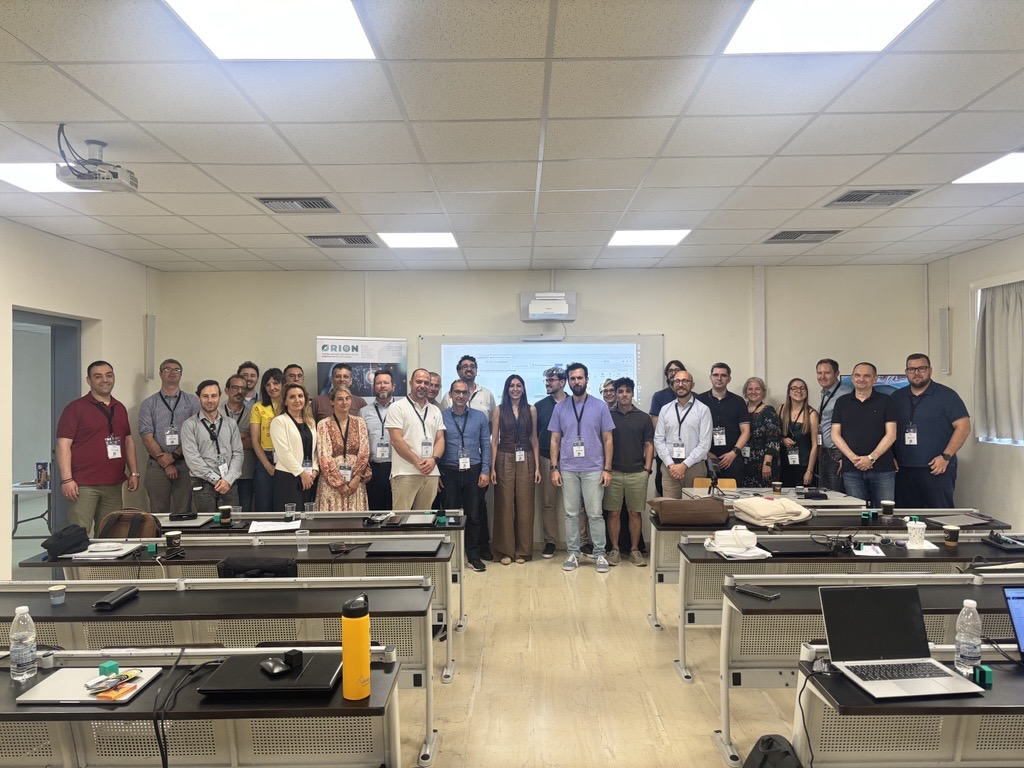
The ORION consortium gathered in Chania, Crete, on 4–5 June 2026 for its Plenary Meeting, hosted by the Hellenic Mediterranean University. The two day meeting brought together partners from across Europe to review progress, strengthen collaboration, and align the next phase of the project.
Ahead of the plenary, ORION partners also had the opportunity to engage with the wider research community through a dedicated conference session, contributing to early visibility of the project’s objectives and approach. The main focus of the week, however, remained on the internal plenary discussions, which allowed partners to take stock of ongoing activities and coordinate upcoming work.
Overall, the meeting marked an important step in the project’s evolution, supporting alignment across technical development, pilot preparation, ethics, and stakeholder engagement.
Day 1 – Coordination, architecture, and operational foundations
The first day of the meeting focused on establishing a shared understanding of progress and priorities across the consortium, combining coordination updates with technical and operational discussions.
Key sessions included:
-
A project overview and coordination update, outlining priorities for the coming months
-
Progress on WP3 – Operational Needs Assessment and Gap Analysis, reinforcing ORION’s user centred approach
-
Discussions on the ORION system architecture, including design principles and interoperability considerations
-
High level technical updates on areas such as identity verification, vehicle screening, privacy considerations and resource allocation
-
Initial planning related to field trials and validation activities
The day concluded with a dedicated session addressing security related aspects of the project, followed by a social dinner that offered partners an opportunity to continue exchanges in a more informal setting.
Overall, Day 1 helped consolidate a shared vision across the consortium, ensuring alignment between operational needs, technical design, and governance considerations.
Day 2 – Pilots, end users, and impact
Building on the foundations set on the first day, Day 2 shifted the focus towards pilot activities, end user engagement, and real-world applicability.
Discussions centred on:
-
Pilot 1, addressing intelligent management of embarkation processes at Ro Ro ferry terminals
-
Pilot 2, based on optimised travellers’ disembarkation from Ro-Ro ferries at high-traffic ports
-
Pilot 3, exploring enhanced risk assessment and resource allocation at land border crossings
-
Pilot 4, focusing on seamless identity verification at train stations
These sessions brought together technical partners and end users, fostering constructive exchanges on operational contexts, expectations, and practical considerations.
In parallel, a session dedicated to WP8 – communication, dissemination, and impact highlighted ongoing efforts to engage stakeholders, increase project visibility, and support the future uptake of ORION results.
The meeting concluded with a wrap up session, during which partners reviewed key takeaways and agreed on next steps.
Looking ahead
The Chania Plenary Meeting reaffirmed the importance of close collaboration across disciplines and organisations. The exchanges held over the two days will directly inform the next stages of the project, from refining technical concepts to advancing pilot preparation and strengthening stakeholder engagement.
As ORION moves forward, the consortium will continue to share insights and updates on its progress.